Uncategorized

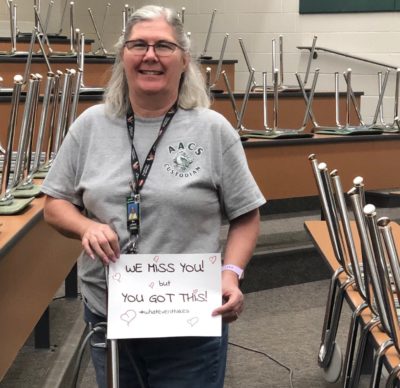
School Custodians Are Essential Frontline Workers For Our Students

Juan Ramos has been a school custodian and union member for nearly 30 years. His father was a custodian before him, and Ramos spent summers helping his dad starting out when he was just fourteen-year-old. With that much experience under his utility belt, Ramos definitely has the know-how to protect students and educators from coronavirus, but only if he and his colleagues have the equipment and staff-power necessary to fight the deadly virus.

A Custodial Checklist

Tammy LaPlante, a high school custodian in Ashtabula, Ohio, offers a checklist of safety and cleanliness precautions as schools reopen.

  • Training for custodians regarding the proper procedures for cleaning and disinfecting, especially if they will be using a disinfecting machine.
  • Adequate supply of PPE as it requires changing your gloves and other PPE when moving from one task to another.
  • Sanitizing stations at all the entrances being used so upon entering the buildings hands can be sanitized.
  • Timetable for cleaning and disinfecting at regular intervals throughout the day and for the night custodians.
  • All touchable areas need wiped down and disinfected to include restrooms, hallways, handrails, elevators, light switches, door handles and push bars, as well as nightly mopping of all floors.
  • Doors should be left open for minimal risk of contamination.
  • Discontinue use of drinking fountains if possible, but if they are used then more regular disinfecting needs to take place.
  • Check CDC guidance on reopening.

NEA is currently working with partners and affiliates to develop guidance on schools reopening.

Uncategorized

Important-law expands worker protections

June 08, 2020

On June 5, Gov. JB Pritzker signed into law the AFSCME-backed bill HB 2455, which gives expands access to unemployment benefits and workers’ compensation coverage.

AFSCME members made hundreds of calls to legislators to urge passage of this bill in the General Assembly, and the union’s legislative team played a critical role in crafting and passing the legislation.

Unemployment Insurance

The new law removes the prohibition against non-instructional education employees receiving unemployment benefits when they are laid off during the 2020 summer months. As a result, thousands of AFSCME members who work for school districts and universities will be able to qualify for Unemployment Insurance (UI) benefits this summer so they can make ends meet for their families. And, through the end of July, UI benefits will be increased by $600/week because of a recent change in federal law.

In addition, the law provides over $2 billion in additional federal funding; an additional seven benefit weeks in the state extended benefit plan; and non-charging for employers’ COVID-19 related unemployment insurance experiences to help the economic recovery efforts.

Workers’ Compensation

The new law also amends the state’s Workers’ Compensation Act to expand access to benefits for first responders and frontline workers stricken with COVID-19. It presumes that essential workers who contract COVID-19 did so because of their employment and makes this standard retroactive to the start of the pandemic.

“These critical changes to our state laws protecting workers would not have been possible without the grassroots advocacy of AFSCME members and the leadership of our legislative staff team,” said Council 31 Executive Director Roberta Lynch. “As AFSCME has for decades, our union will continue to fight for the rights of all workers during this unprecedented time.”

Uncategorized

You are Cordially Invited

ESPs, I hope this finds you safe and healthy during this tumultuous time. Your ESP Council continues to work for you, to bring your concerns to the forefront so change and support can happen. On June 13th ESPs throughout Illinois are invited to the next ESP Council Zoom meeting from 10am-12pm. Please join us as we gather information on issues that ESPs are facing today. We need your input and leadership to guide us moving forward.

Please RSVP to Arlene Criglar at Arlene.Criglar@ieanea.org to receive the Zoom link.

If you are unable to attend you can still share your thoughts using to link below. We look forward to hearing from you. Your Voice, Your Union! #rESPect

https://ieaespcouncil.com/meet-yo…/contact-your-esp-council/

Uncategorized

New Learning Portal Is Now Live

The Illinois Education Association strives to offer you free, high-quality online professional development that fits your needs and is available on-demand to fit your changing schedule. We’re excited to announce our updated experience is now live! Check out this video tutorial to get started on the updated experience right away!
Are you actively using the IEA Online Learning Portal now? Don’t worry! You’ll continue to have access to the legacy platform until June 2. To help ease the transition, over the next few weeks you can expect to receive an email with your legacy course completion certificates for all courses completed as of April 30. If you complete a course after April 30 on the legacy platform, please download and save the course completion certificates as you complete them.

We’re so excited to offer you this updated platform as a benefit of your membership. Thank you so much for all you’re doing for our students. We’re so glad you’re an IEA member.
Uncategorized

We Rise Together – NEA Week of Action

US SENATORS AND REPRESENTATIVES FROM ILLINOIS

The COVID-19 pandemic has affected all our lives in so many ways. All our lives will change in ways we don’t even know yet. But we cannot and will not just sit and wring our hands. We must plan, prepare, and mobilize to advocate for what we know students and educators need. IEA members are coming together with families, community leaders and other activists to demand that Congress act to ensure that students and communities Rise Together.

Uncategorized

Educators and parents join to tell Congress to support students now

WASHINGTON – May 14, 2020 –

Leaders from two of the largest and most influential education organizations, the National Education Association and the National PTA, along with teachers and education support professionals who continue to serve students during the coronavirus pandemic, joined together in a national media call. They addressed the pressing issues facing students, families and educators, including what’s needed from Congress as elected officials discuss transitioning to in-person learning for the 2020-21 academic year.

Congress to support students now

NEA releases poll data and launches national campaign, including million-dollar ad buy

WASHINGTON – May 14, 2020 –

Leaders from two of the largest and most influential education organizations, the National Education Association and the National PTA, along with teachers and education support professionals who continue to serve students during the coronavirus pandemic, joined together in a national media call. They addressed the pressing issues facing students, families and educators, including what’s needed from Congress as elected officials discuss transitioning to in-person learning for the 2020-21 academic year.

“The partnership between parents and educators is so important, especially in this time of crisis. Educators’ number-one concern is the safety, well-being and success of our students,” said NEA President Lily Eskelsen García. “Unfortunately, the COVID-19 pandemic has exposed and exacerbated the inequities facing our most vulnerable students and with the economic downturn now threatening the future of public schools, parents and educators are standing together because we cannot wait. Our nation’s students cannot pay the price in this crisis.”

As Americans brace for what could be the worst economic downturn in U.S. history, educators and parents are demanding that Congress act quickly to support students and provide the federal funding they need to succeed. Estimates of state revenue shortfalls range from $500 billion from the National Governors Association and Economic Policy Institute to $650 billion over 3 years, according to the Center on Budget and Policy Priorities. School finance experts also predict that hundreds of thousands of education jobs could be lost — impacting the education of millions of students — absent federal intervention.

This week, House Democrats introduced a new coronavirus relief bill, the Health and Economic Recovery Omnibus Emergency Solutions Act or “HEROES Act,” to provide more resources for students and educators through vital funding for public schools and communities combatting the coronavirus crisis. While this legislation isn’t perfect, it includes $100 billion specifically for K-12 and higher education along with $915 billion in state and local aid to address budget gaps that could be used to help public schools and college campuses.

NEA’s intensive advocacy campaign kicks off with a tele-townhall featuring Sen. Kamala Harris (D-Calif.), Rep. Jahana Hayes (D-Conn.), and award-winning actor Bradley Whitford, as well as thousands of education activists, to discuss what is at stake for students and communities. Over the course of the coming weeks, NEA will be organizing virtual #RedForEd rallies across the country and engaging educators and parents in tens of thousands of phone calls and emails to Congress, telling lawmakers to put politics aside and provide emergency funding for students now.

More resources are available at nea.org/coronavirus.

Follow on twitter at @NEAmedia, @Lily_NEA and @NationalPTA

Keep up with the conversation on social media at #ProtectAllWorkers and #RedForEd

Uncategorized

JOIN OUR NATION’S STUDENTS AND EDUCATORS AS WE RISE TOGETHER FROM COVID-19

The coronavirus may have closed school buildings and campuses, but it didn’t stop educators from working to ensure their students learn, cope, and even get fed.

It has revealed how critical public schools and educators are to our students, communities and country.

We need you to RISE with us and TAKE ACTION

The coronavirus may have closed school buildings, but it has also revealed the determination and resolve of educators to help their students. The coronavirus has also exposed a great divide. Some students, especially those who are black, brown, and poor, have been disproportionately affected by the coronavirus, and unless we act, will face steeper obstacles in the future because of it.

The nation’s recovery from COVID-19 will run through our public schools, so we need to make sure we prioritize educators and students in coronavirus relief legislation.

ACTION 1: Write Congress

With our country and public schools facing serious financial challenges due to the COVID-19 crisis, students need you to speak up now! Congress MUST prioritize dedicated funding to support public school students, educators, and communities in the next coronavirus relief package, not just billionaires and corporations. TAKE ACTION 

Action 2: Recruit Your Friends

The more people who join our efforts, the louder our voices will be.

SHARE ON Twitter SHARE ON Facebook

Action 3: Build Collective Action

BECOME AN NEA COMMUNITY ALLY Together, we will advocate for legislation to help students, educators, and public schools navigate the fallout from COVID-19. But we need your support. Become a community ally for $25 and help fund our efforts. JOIN NEA

Action 4: Pledge Your Support

The coronavirus may have closed school buildings and campuses, but it didn’t stop educators from working to ensure their students learn, cope, and even get fed. TAKE ACTION